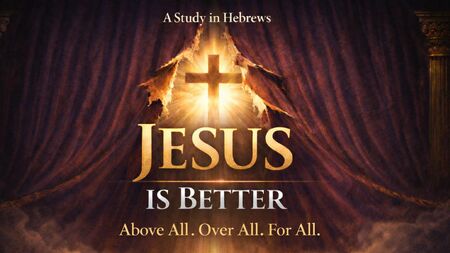
In this sermon from Hebrews 10, the pastor began by summarizing the first 18 verses, which recap the core message of Hebrews thus far: the law was a shadow of something better, repeated sacrifices could never fully remove sin, and Jesus came to do what those sacrifices never could. Jesus offered one perfect sacrifice, sat down because His work was finished, and opened the way into the holy of holies for all believers. Because of this finished work, we are being sanctified and our sins are remembered no more. From verse 19 onward, the pastor shifts the question from 'Jesus is better' to 'now what?' He identifies three calls to action drawn from the text, each beginning with 'let us.' First, let us draw near to God in faith, enjoying the access Jesus purchased for us through prayer, worship, and running to God rather than away from Him when we fail. Second, let us hold fast to our hope without wavering, trusting not in our own strength but in the faithfulness of God who made the promise. Third, let us consider one another, intentionally encouraging, stirring up, and showing up for fellow believers. The pastor emphasized that gathering together is not about attendance or consumerism but about recognizing that the body of Christ needs every member, and that urgency grows as the day of Christ's return draws near.
Key Verses: Hebrews 10:19-25; Hebrews 6:19; Hebrews 4:16; 1 Corinthians 13:13
Key Takeaways
- Jesus opened the way into the presence of God through his one perfect sacrifice, and we can now draw near to God boldly and with full confidence, not because of our own righteousness but because of His blood.
- Drawing near to God is not limited to Sunday mornings. It includes daily prayer, time in the Word, worship in everyday moments, and running to God rather than away from Him when we struggle or fail.
- Holding fast to hope is not about the strength of our grip but about the faithfulness of the God we are holding onto. Our hope is anchored in his unchanging character, not in our circumstances or emotions.
- The call to gather together is not about attendance or religious obligation. It is about the intentional, mutual encouragement that only happens when we are present with and attentive to one another as members of one body.
- Faith turns us toward God, hope keeps us anchored in His promises, and love turns us toward each other. All three are essential to a healthy and fruitful Christian life.
Application & Reflection
Identify one specific person God has placed on your heart who needs encouragement. Reach out to them intentionally, whether by a phone call, a text, a visit, or a prayer shared together. Ask God to show you what that person needs, whether it is your testimony, your presence, your prayer, or simply a reminder that someone sees them and is cheering them on. Come back next week ready to share how that conversation or connection went.
- The pastor described sanctification as the process of being changed from what we used to be into what God wants us to be. Where do you currently see that process at work in your own life?
- The sermon emphasized that we can come boldly to God not because of our own goodness but because of the blood of Jesus. How does that truth change the way you approach God in prayer or worship?
- The pastor noted that when we feel like we have failed or fallen short, our tendency is to pull away from God rather than draw near to Him. Have you experienced that tendency? What helps you run toward God instead of away from Him?
- Holding fast to hope, according to the sermon, is not about how tightly we grip God but about how faithful God is. How does shifting the focus from your own strength to God's faithfulness change the way you face difficult seasons?
- The pastor described the Christian life as not being a 'Jesus and me' journey but a shared walk within the body of Christ. What has the community of other believers meant to you personally in your faith journey?
- The sermon challenged us to move from asking 'what did I get out of church today?' to asking 'who did God place around me that I can encourage?' How might that shift in perspective change the way you show up for your church community?
- The pastor pointed out that when one member is absent, there is a real gap felt in the body. Have you ever experienced a moment when someone's presence or absence made a significant difference to you spiritually?
- The passage closes with a sense of urgency, saying we should encourage one another 'all the more as you see the day drawing near.' How does the reality of Christ's return motivate you to be more intentional about encouraging others in their faith?