When Your Back Is Against the Wall

Most of us have been there. You pray about something that worries you, and then you worry that the worry itself means you don't really trust God. It becomes a spiral. And somewhere in that spiral, a new fear creeps in: what if my faith just isn't strong enough?
The story of Israel crossing the Red Sea, remembered in Hebrews 11:29, has something important to say about all of that.
What Does Hebrews 11:29 Actually Say?
"By faith the people crossed the Red Sea as on dry land, but the Egyptians, when they attempted to do the same, were drowned." - Hebrews 11:29
That single verse carries a lot of weight. But to understand it, you have to go back to Exodus 14 and see what was actually happening on the ground.
What Was Israel's Situation at the Red Sea?
Moses had led the Israelites out of Egypt after the plagues, the Passover, and Pharaoh's reluctant release. But Pharaoh quickly changed his mind. He gathered his chariots, his horses, and his best military commanders and set out in pursuit.
Israel found themselves camped at a specific location God had directed them to, with the Egyptian army closing in behind them and a sea they could not cross in front of them.
Their response? Fear and complaints. They turned on Moses and said they would have been better off staying in Egypt. They were not standing tall with confident, unwavering belief. They were frightened and pointing fingers.
And yet, Hebrews 11 records this moment as an act of faith.
Does God Require Perfect Confidence Before He Acts?
This is where a lot of people get stuck. There is a common assumption that God moves based on how much confidence we can generate. That if we just believe hard enough, feel certain enough, or pray with enough conviction, then God will respond.
But that is not what happened at the Red Sea.
The Israelites were complaining when God parted the waters. Their fear was real. Their doubt was visible. And God delivered them anyway.
Faith is not about producing enough internal confidence to move God. Faith is believing God and acting on what He says. Those are very different things.
What Actually Parted the Red Sea?
God did. Not the faith of the people. Not their spiritual maturity or their track record of obedience. God sent a strong wind and divided the waters. He positioned Himself between the Egyptian army and Israel and watched over them through the night.
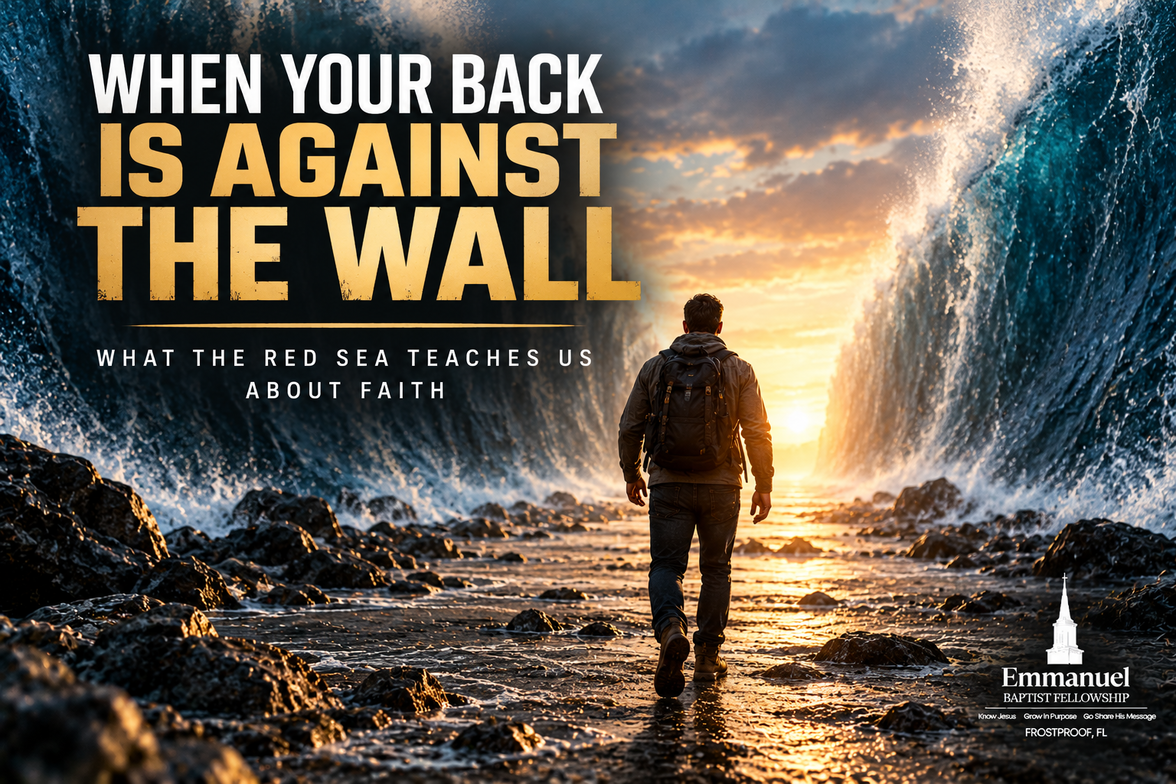
The faith came in what happened next. When the waters parted and dry land appeared, the people had to actually walk into it. Water on the left. Water on the right. And they stepped forward anyway.
That is the faith Hebrews is pointing to. Not the miracle itself, but the obedient step into the provision God had already made.
Obedience Moves the Hand of God
There is a tendency to think that the key to seeing God work is generating enough internal belief. But Scripture points to something different. Obedience is what moves the hand of God.
God gave Moses specific instructions. Go to this place. Stay there. Lift your staff. Moses obeyed. The waters parted. The people walked through.
They did not step into unparted water and then watch it open. God made the way before they took their first step. But they still had to take the step.
Faith can take the next obedient step even while fear and uncertainty are still present. That is not a lack of faith. That is exactly what faith looks like in real life.
What Has God Already Said About Your Situation?
One of the most practical questions to ask when you are backed against a wall is this: what has God actually said about this?
We often spend our prayer time telling God how we want the situation resolved. We map out the doors we want opened and the outcomes we are hoping for. But there is a difference between God's promises and the specific outcome we are hoping for.
Hebrews 13 reminds us that God has promised His presence and His help. That is not a small thing. His presence alone is enough. And when you combine that with the reality that His solutions are far greater than anything we could plan or imagine, the invitation becomes clear: stop trying to control the outcome and start trusting the One who holds it.
Why Do We Try to Control What We Cannot?
Israel's instinct when they saw the army coming was to negotiate their way back into slavery. That was their version of a solution. Go back to what was familiar, even if it was hard, because at least it was known.
There are moments in every person's life when going back to what God has already called you out of feels safer than trusting Him with what is ahead. The familiar is comfortable. The unknown requires trust.
But God knows what is better for us than we do. He was not surprised by the Egyptian army. He had already accounted for the geography of the sea floor. He had already planned the wind. He had already made the way.
Worrying about tomorrow's maybes costs you today's joy. And most of the time, what we spend our energy dreading either never happens or gets resolved in a way we never would have predicted.
What About the Egyptians Who Followed?
The same event that brought deliverance to Israel brought judgment to Egypt. The army pursued Israel into the parted sea, following the same path. But they were not meant to be there. The waters closed, and not one of them survived.
Deliverance and judgment happened at the same moment. God opened the way, but the people still had to entrust themselves to Him enough to walk through it. The path was the same. The outcome was completely different based on whose word they were standing on.
The Hall of Faith Is Not Full of Perfect People
Hebrews 11 is sometimes called the Hall of Faith, and it can feel intimidating. But look closely at the people listed there. They were liars, cheaters, doubters, and people with serious dysfunction in their families and their choices.
What is remembered is not their perfection. What is remembered is their confidence in God, even imperfect and incomplete as it was. They took steps of action and obedience one day at a time.
That is the faith journey. Not arriving at some level of spiritual achievement, but being changed from what you were into what God is making you.
Salvation Is the Ultimate Example of God Making the Way First
The pattern at the Red Sea points to something even greater. God parted the waters before Israel took a single step. In the same way, God made a way for us through Jesus before we ever came to Him.
"But God demonstrates His own love for us in this: While we were still sinners, Christ died for us." - Romans 5:8
Whatever stands between you and God, whether it is your past, your doubts, your addiction, your family history, or your theology, He has already made a way through it. The sea is already parted. The invitation is to take the step.
Life Application
This week, identify one situation in your life where you have been trying to control the outcome instead of trusting God with it. Write it down. Then, instead of telling God how you want it resolved, simply bring it to Him and ask what the next obedient step is. Take that step, even if you still feel afraid.
Faith is not the absence of fear. It is taking the next step anyway because you trust the One who already made the way.
Ask yourself these questions as you reflect:
- Am I carrying the burden of producing a miracle that only God can produce?
- What has God actually said about the situation I am facing, and am I standing on that or on my own preferred outcome?
- What is the next obedient step God is asking me to take, even if I cannot see the full path yet?
God delivered a frightened, complaining people. He can deliver you too. You just have to trust Him enough to take the step.