Press On

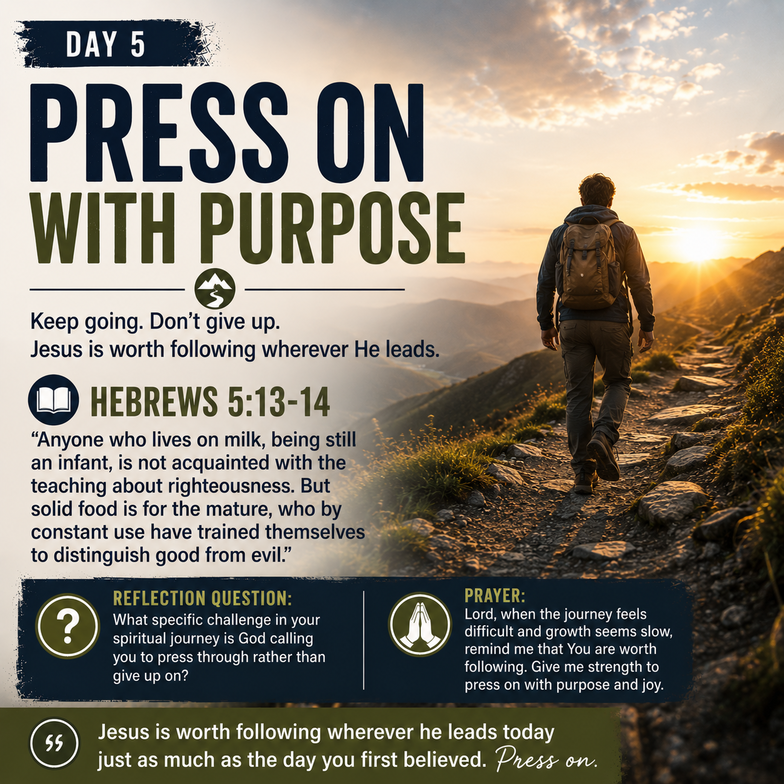
The Christian life was never meant to be a destination where we simply arrive and stay put. Yet many believers find themselves spiritually stagnant, content with the basics of faith while missing out on the deeper relationship God desires with them. The writer of Hebrews addresses this very issue, challenging believers to move beyond spiritual infancy into mature faith.
Why Do We Become Spiritually Dull?
The Hebrew believers were experiencing what many Christians face today - they had become "dull of hearing." This wasn't about a lack of opportunity or teaching. They had access to God's word and instruction, but they had developed spiritual sluggishness.
Think about the noises in your home that you no longer notice - the air conditioner, the refrigerator humming, or traffic outside. Over time, these sounds become background noise. Similarly, we can become so accustomed to spiritual truth that we stop truly hearing it.
The writer of Hebrews was frustrated because he wanted to teach them deeper truths about Jesus as their great high priest, but they weren't ready. They had grown comfortable with elementary teachings and stopped pursuing spiritual growth.
What Does Spiritual Maturity Look Like?
The passage uses a powerful illustration comparing spiritual growth to physical development. Just as babies need milk but eventually must transition to solid food to grow properly, believers need to move beyond basic spiritual truths to more substantial understanding.
"'For though by this time you ought to be teachers, you need someone to teach you again the basic principles of the oracles of God. You need milk, not solid food'" - Hebrews 5:12.
Spiritual maturity isn't measured by how much Bible knowledge you possess, but by how much truth you've learned to live. It's about developing discernment through constant practice, learning to distinguish good from evil in daily decisions.
The Call to Press Forward
The solution isn't to abandon the foundational truths of faith, but to build upon them. "'Therefore let us leave the elementary doctrine of Christ and go on to maturity, not laying again a foundation of repentance from dead works and of faith toward God'" - Hebrews 6:1.
This doesn't mean moving away from Christ, but moving deeper into understanding who He is and what He has accomplished. The foundation remains the same - repentance, faith, and basic Christian doctrines - but we're called to construct a mature faith upon that foundation.
What Happens When We Turn Back?
The writer gives a sobering warning about apostasy - the deliberate rejection of Jesus Christ after fully understanding the Gospel truth. This isn't about believers who struggle with sin or doubt, but about those who completely turn their backs on Christ after experiencing His goodness.
"'For it is impossible, in the case of those who have once been enlightened, who have tasted the heavenly gift and have shared in the Holy Spirit... and then have fallen away, to restore them again to repentance'" - Hebrews 6:4-6.
The Hebrew believers were being tempted to return to their old religious practices to avoid persecution. The writer warns them that there is no other sacrifice, no other mediator, no other way to salvation besides Jesus Christ.
Understanding the Warning
This passage addresses apostasy - not the struggles of sincere believers, but the complete rejection of Christ by those who have fully understood the Gospel. It's like someone hearing the truth, experiencing God's goodness, and then deliberately choosing to walk away and reject it all.
The illustration of two fields receiving the same rain and sun, yet one producing fruit and the other thorns, shows that the difference isn't in what we receive from God, but in how we respond to it.
How Do We Grow Spiritually?
Spiritual growth isn't automatic - it's intentional. Just as we get hungry multiple times a day and need regular meals, we need consistent spiritual nourishment beyond a once-weekly church service.
Maturity comes through:
- Regular exposure to God's Word
- Obedience to what we learn
- Daily walking with Christ
- Constant practice in applying biblical truth
A Christian is built for growth - growing in knowledge of God's Word, growing in obedience to it, growing in trust, and growing in Christlikeness.
Moving Beyond Comfort Zones
Many believers get stuck in spiritual comfort zones, satisfied with ankle-deep faith when God calls them into deeper waters. If you're always staying in the shallow end, you'll never experience the fullness that God has for you.
The goal isn't just to be older in faith five years from now, but to be deeper in Christ. Don't just be someone who attends church - be someone who knows Christ more deeply, trusts Him more fully, follows Him more faithfully, and loves Him more passionately.
Life Application
This week, challenge yourself to move beyond spiritual comfort zones. Salvation is the starting line, not the finish line. Ask yourself these critical questions:
- Where have I become spiritually comfortable and stopped growing?
- In what areas have I become dull of hearing to God's voice?
- What truth do I need to obey rather than just understand?
- What next step is God calling me to take in my faith journey?
Press on when the journey feels difficult. Press on when growth feels slow. Press on when life presents obstacles and barriers. Jesus is worth following wherever He leads, just as much today as the day you first believed. Don't get stuck - press on toward spiritual maturity and the deeper relationship with Christ that He desires for you.